
sara’s story:
when survival
is punished.
Sara Ramirez never expected to become involved with the criminal legal system.
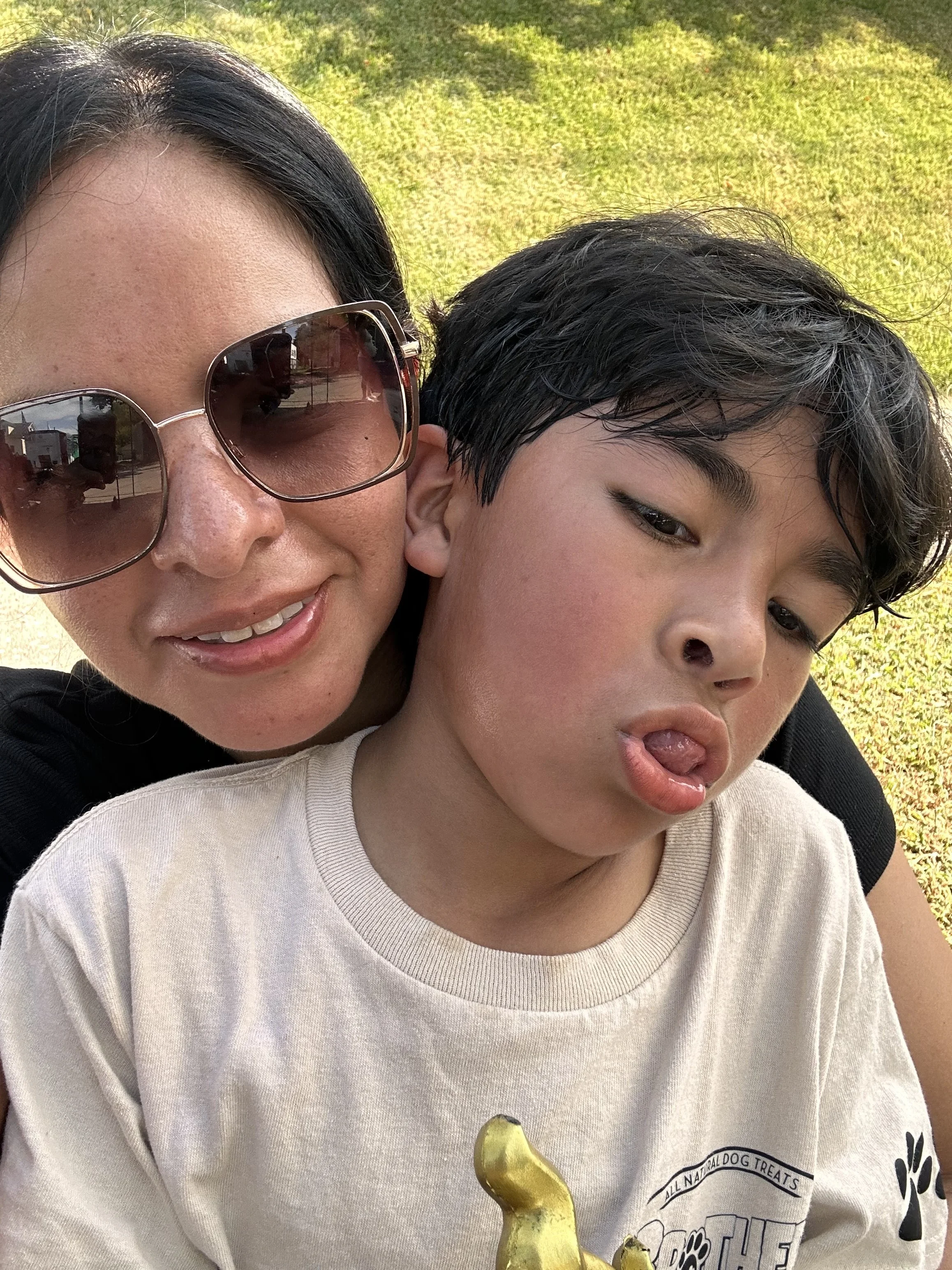
A single mother of five, Sara spent more than a decade in a relationship marked by coercive control, violence, intimidation, and repeated threats to her life and the lives of her children. Like many survivors, she sought help multiple times from law enforcement and the courts. Yet despite her efforts, the abuse continued.
In 2022, while her abuser was incarcerated on charges involving another victim, Sara was pressured to contact that victim on his behalf. To an outside observer, sending those messages may appear to have been a choice. But that choice cannot be separated from the decade of violence, intimidation, and coercive control that came before it. Sara had experienced repeated physical assaults, strangulation, threats with firearms, stalking, and explicit threats to kill her and her children if she disobeyed or attempted to leave. She had documented much of this abuse through police reports, photographs of injuries, and reports to service providers. Over time, she learned through experience exactly what her abuser was capable of doing when challenged. Like many survivors living under coercive control, Sara's actions were shaped by fear, survival, and the belief that noncompliance could place her and her family in danger. Rather than recognizing the context in which those actions occurred, the legal system charged Sara with felony offenses.
Today, nearly four years later, her case remains unresolved.
The consequences have been devastating. Sara lost her job, faced financial instability, and continues to live under the weight of pending felony charges. Meanwhile, the legal process itself has become another avenue through which her abuser's control persists, prolonging uncertainty and preventing her from fully moving forward with her life.
Why sara’s story matters.
Sara's experience is not an isolated one.
Across the country, survivors of domestic violence, sexual violence, and trafficking are frequently criminalized for actions that occur within the context of coercion, survival, and abuse. Too often, systems fail to recognize the realities of coercive control and instead evaluate survivors' actions without considering the circumstances that shaped them.
Many survivors do not fit society's narrow expectations of the “perfect victim.” They may stay, return, protect their abuser, remain silent, or comply with demands out of fear. These responses are not evidence that abuse did not occur; they are often evidence of the abuse itself.
At Arena Therapy & Justice Center, we believe that survivors deserve responses grounded in trauma-informed understanding, not punishment. Sara's story highlights the urgent need for greater awareness of criminalized survivorship, more informed decision-making by legal actors, and systems that recognize the complex realities of abuse.
When survivors are treated as offenders instead of people who have been harmed, justice is not served.
Sara's story challenges us to ask a difficult but necessary question: How many survivors are being punished for the very survival strategies that helped them stay alive?
What you can do:
Sara's story is not an exception, it is part of a larger pattern affecting survivors across the country. Every day, survivors of domestic violence, sexual violence, and trafficking face criminal consequences for actions that occurred within the context of coercion, fear, and survival.
Changing this reality requires public awareness, informed advocacy, and systems willing to recognize the impact of trauma and coercive control. We invite you to learn more about criminalized survivorship, share stories like Sara's, and support efforts to create survivor-centered responses within our legal and social service systems.
Share sara’s
story
Public awareness creates public pressure. Every time Sara's story is shared, the State is reminded that the community is watching, and that survivors deserve justice, not criminalization.
Get shareable image
Sign the letter of support
Signatures carry weight. When advocates, professionals, and community members put their names behind a cause, systems take notice. Add yours to our letter of support and tell the State that Sara's case demands a just resolution
Sign the letter
Donate to Arena’s
Freedom fund
Sara's story doesn't end in the courtroom — and neither does the financial toll. Your donation to Arena's Freedom Fund helps survivors cover the real costs of rebuilding: transportation, childcare, therapy, and legal fees, so they can focus on healing instead of choosing between safety and survival.
donate & learn more
Expand your understanding:
Unreasonable Women
by Justine van der Leun
Recently published book where she tells of three women’s journeys through survival and punishment. She often posts about this content on social media.
check it out
Dear sister
by Michelle horton
A book about her sister, Nikki Addimando, and their fight for freedom and justice. (Justine van der Leun writes about Nikki in her book, too).
check it out
april wilkens &
tyesha long
Two survivors fighting for justice in Oklahoma, where a new law was passed allowing survivors of abuse to present evidence of their abuse as a mitigating factor in criminal proceedings.
current Chicago trials
Currently, in Chicago, there are several survivors facing trial for similar acts of survival. Follow @FreeKeshiaGolden, @holidarity (activist Holly Krig), @momsunitedchicago, @loveandprotect, and @womensjusticeinstitute on Instagram to stay informed on their stories, and get involved in collective, community advocacy.